Heavy Minerals Recovery from Overburden Waste
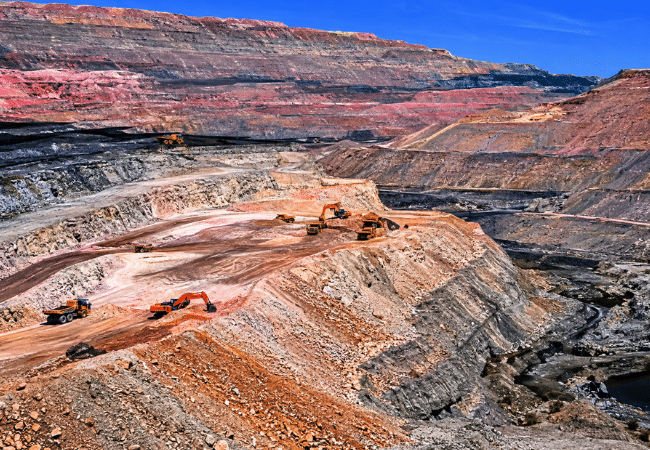
Under policies like India's National Critical Mineral Mission, mine waste is actively classified as a "secondary mineral resource." Reprocessing overburden and tailings helps secure domestic supplies of critical and rare-earth elements while reducing the environmental impact of disposal.
Heavy Minerals Recovery from Fly Ash / Bottom Ash
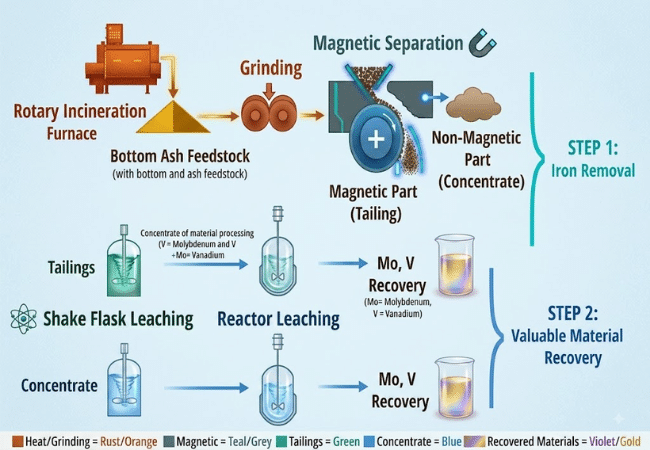
Heavy minerals and critical metals such as rare earth elements, titanium, and aluminum are recovered from fly ash using a multi-step process. First, physical separation methods such as magnetic separation, gravity separation, and electrostatic separation remove iron. Then, hydrometallurgical leaching with acids such as sulfuric acid extracts the valuable elements. Finally, solvent extraction or precipitation isolates the specific high-value minerals.
Heavy Minerals and Gold Recovery from Gold Ore Tailings
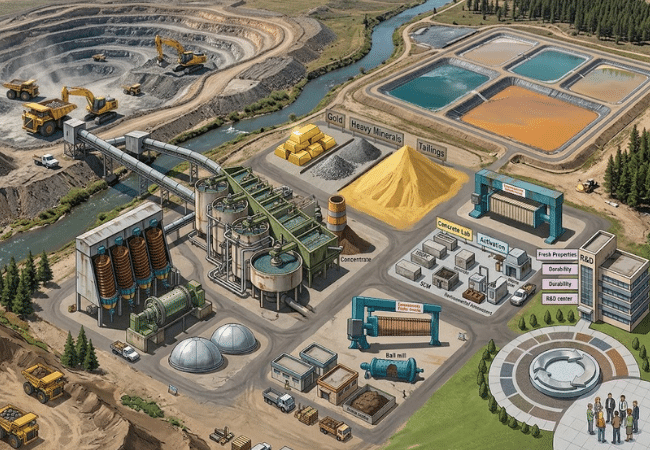
Gold ore tailings are typically considered waste, but older operations often lost gold due to limitations in historical processing technology. To unlock the residual value, the tailings are first re-ground to ensure that 60–80% of the particles pass through -200 mesh (approximately 74 microns). This helps liberate any gold or heavy minerals previously locked inside larger host minerals such as quartz.
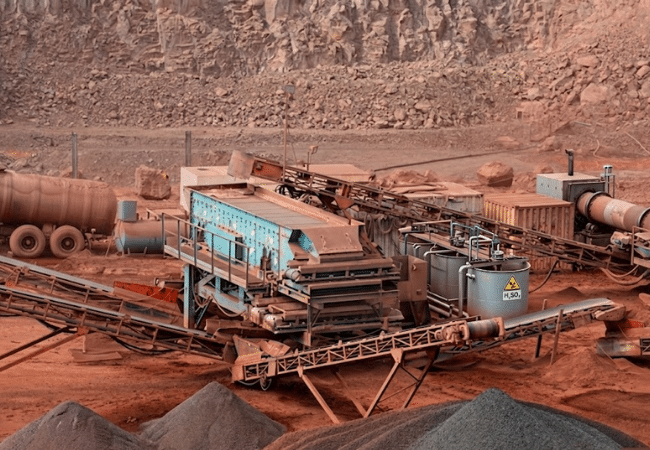
Heavy Minerals Recovery from Red Mud
Heavy minerals recovery from red mud (bauxite residue) involves extracting valuable metals such as iron (Fe), titanium (Ti), aluminum (Al), and critical rare earth elements (REEs) such as scandium (Sc). The process primarily relies on hydrometallurgical (acid leaching) and pyrometallurgical (smelting or roasting) techniques to transform hazardous waste into strategic raw materials.
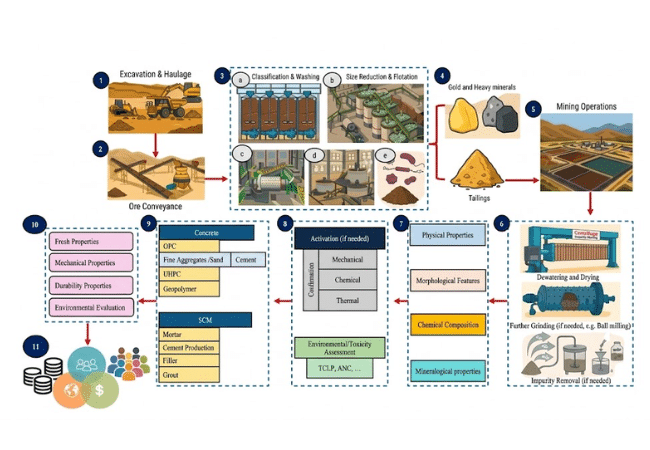
Heavy Minerals Recovery from Copper Ore Tailings
Recovering heavy and critical minerals from copper ore tailings, such as copper, gold, silver, iron, and rare earth elements, is achieved by combining re-grinding to liberate trapped minerals with froth flotation, gravity separation, or hydrometallurgical leaching.
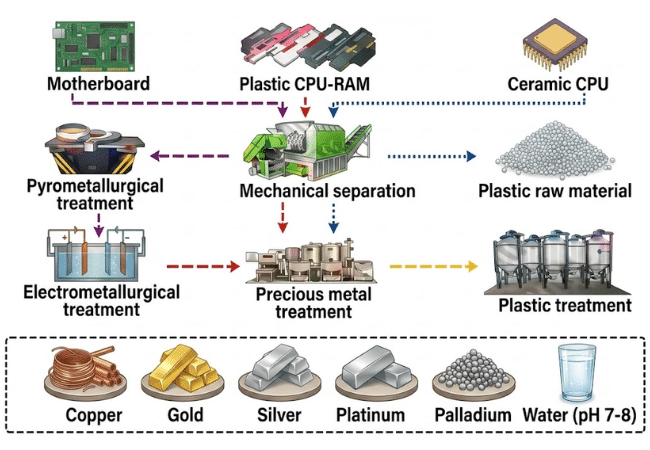
E-Waste Recycling
The e-waste recycling process extracts valuable resources such as gold, copper, and silver from old electronic devices, preventing hazardous toxins from polluting the environment. The standard process involves several stages, including shredding, grinding, magnetic separation, gravity separation, eddy current separation, and electrostatic separation.
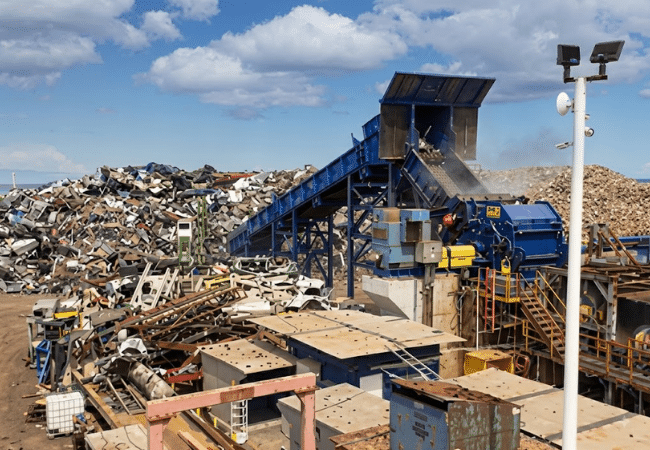
ELV Recycling
End-of-Life Vehicle (ELV) recycling is the systematic process of dismantling unroadworthy vehicles and depolluting them to safely extract and recover up to 95% of their materials, including steel, aluminum, and plastics. This process directly supports the circular economy and reduces reliance on virgin resources.
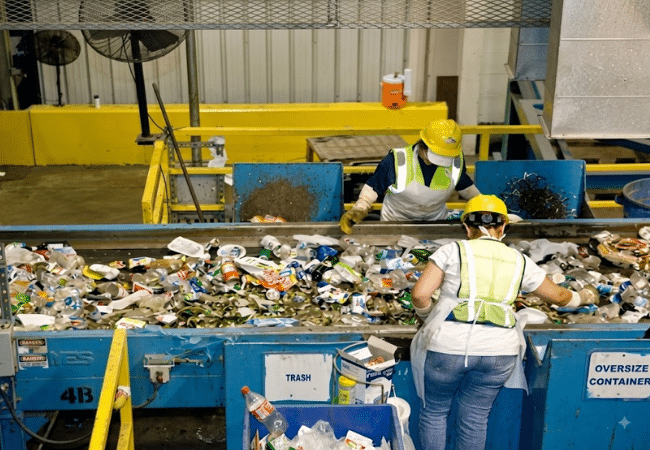
Plastic Recycling
Plastic recycling helps reduce landfill waste by melting and reforming used plastics into new products or breaking them down into chemical components. The general process involves collecting, sorting by resin type (e.g., PET #1, HDPE #2), washing to remove contaminants, shredding into flakes, and melting into reusable pellets.
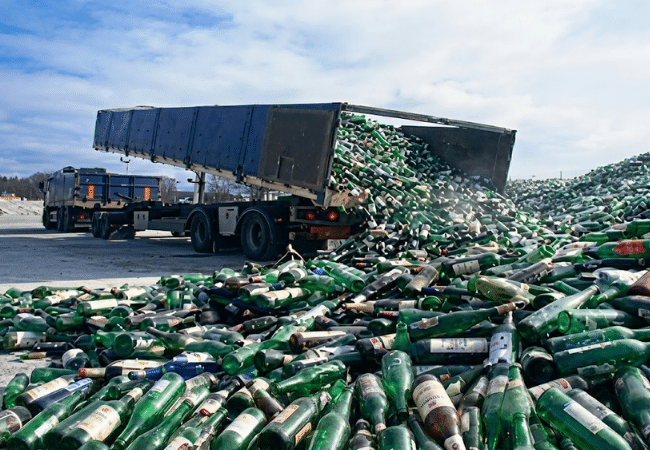
Glass Recycling
Glass is 100% recyclable and can be processed endlessly without losing its purity or quality. The recycling process involves sorting by color, crushing into "cullet," and melting at high temperatures to manufacture new containers. Every ton of glass recycled saves over a ton of raw natural resources.
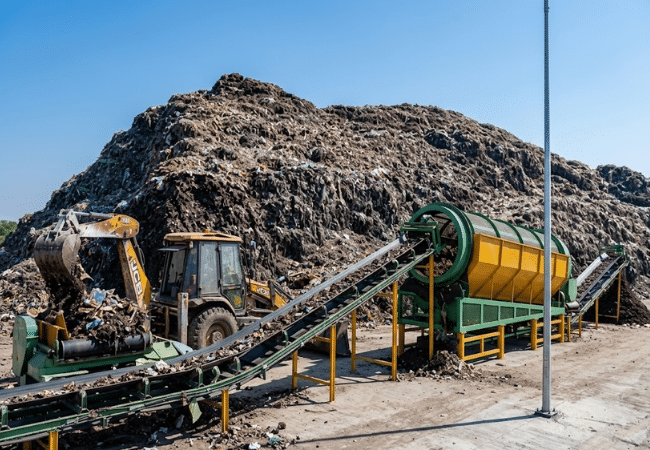
MSW Recycling
Municipal Solid Waste (MSW) recycling diverts household and commercial waste from landfills by sorting and processing it into reusable raw materials. It relies on Material Recovery Facilities (MRFs) using screens, magnets, and manual labor to separate paper, plastics, glass, and metals. Non-recyclable materials are frequently converted into Refuse-Derived Fuel (RDF).
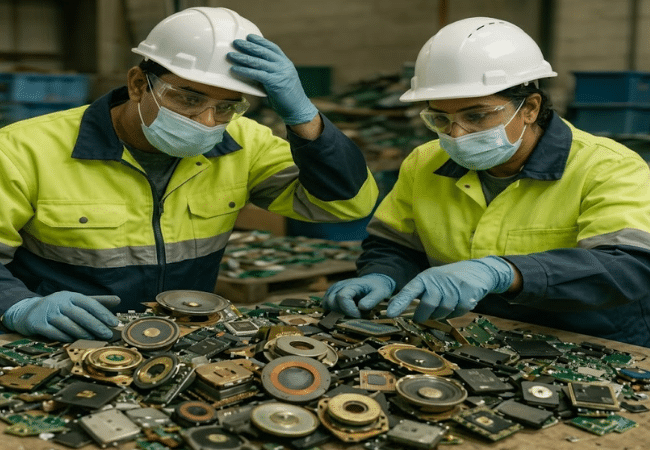
Rare Earth Magnet Recycling
Rare earth magnet recycling is the process of recovering critical elements such as neodymium, dysprosium, and praseodymium from end-of-life electronics, wind turbines, and EV motors. Because less than 1% of these magnets are currently recycled globally, facilities use advanced methods such as Hydrogen Decrepitation (HD) to break magnets into powder without damaging machinery.
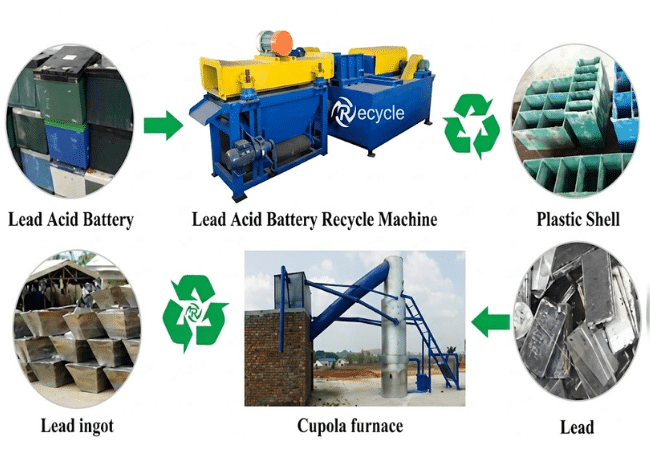
Lead Battery Recycling
Lead-acid battery recycling is a highly effective, closed-loop process in which up to 99% of the battery's lead, plastic, and sulfuric acid can be recovered. The recycling process typically involves mechanical shredding, density-based separation, and smelting, preparing the raw materials for reuse in the manufacturing of new batteries.
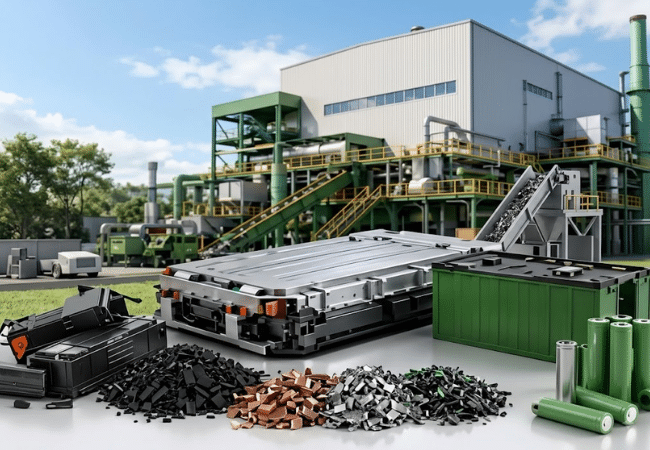
Lithium Battery Recycling
Lithium battery recycling recovers critical minerals such as lithium, cobalt, and nickel from spent EV and electronic batteries. Recyclers use physical shredding to create a powder called "black mass," followed by hydrometallurgical processes such as acid or solvent leaching to extract highly pure, reusable metals. This process significantly reduces greenhouse gas emissions and water consumption compared to traditional mining. Proper recycling also helps prevent dangerous fires and environmental hazards associated with improper battery disposal.
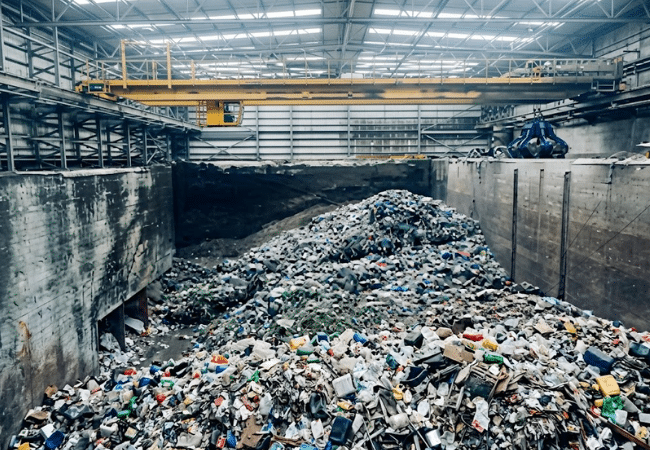
Industrial Waste Recycling
Industrial waste recycling converts manufacturing by-products such as scrap metal, cardboard, and plastics into reusable raw materials. It requires specialized mechanical processing, chemical decomposition, or energy recovery. This process diverts large volumes of waste from landfills, reduces carbon footprints, and generates revenue.
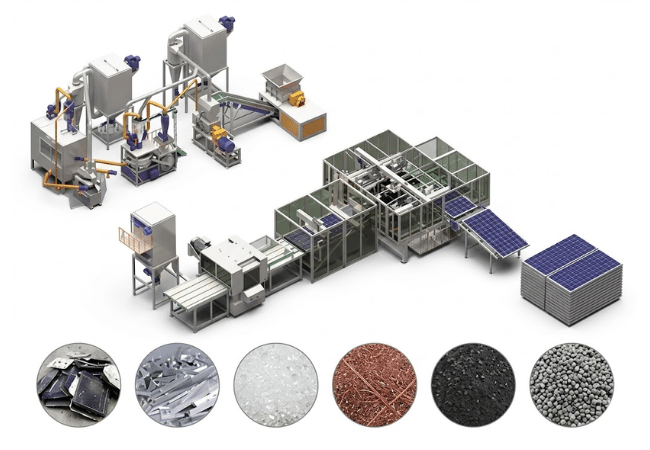
Solar Panel Recycling
Solar panel recycling extracts valuable materials such as glass, aluminum, copper, and silver from decommissioned panels. The process involves removing frames, separating layers through thermal or chemical delamination, and shredding cells to recover more than 90% of a module's weight.